
The group photograph shows everyone smiling. The organisation publishes an awareness post on the right calendar date. A ramp now leads into a building that never considered every person who might use it.
These actions can matter. However, they do not automatically create an inclusive experience. Sometimes, they simply check a box and produce a good photograph.
So, what does inclusion actually look like in practice?
Real inclusion is often quieter than a public campaign. It is also more difficult because it requires organisations to change how people participate, contribute and belong.
Inclusion Is Not Presence Without Participation
Placing someone in a room does not mean you have included them.
A person may attend a meeting, event or sporting activity without receiving a real opportunity to contribute. People may overlook their ideas, ignore their needs or make decisions without involving them.
That is presence without participation.
Genuine inclusion gives people the support and opportunity to take part meaningfully. It does not treat their presence as enough.
Access Should Not Stop at the Entrance
A wheelchair ramp is essential, but inclusion must continue after someone enters the building.
Can the person move comfortably through the space? Is there room for them at the table? Can they use the facilities and take part in every important activity?
If access ends at the entrance, the wider experience remains incomplete.
The same principle applies beyond physical access. A person may enter a workplace or event but still face communication, sensory or social barriers.
Therefore, organisations must consider the full experience rather than one visible adjustment.
Awareness Must Lead to Action
Every April, organisations publish messages about autism awareness. Other awareness days also bring statistics, coloured frames and public statements.
Then the date passes.
If nothing changes in how people are hired, supported, heard or included, the campaign has achieved visibility without meaningful action.
Awareness should help people understand an issue. More importantly, it should influence what they do next.
For example, an organisation can review its policies, improve its spaces and listen to people with lived experience. It can also invest in support services and make its hiring practices more inclusive.
Awareness becomes valuable when it leads to consistent action.
What Inclusion Actually Looks Like
Inclusive environments consider different people from the beginning. They do not wait until exclusion becomes too obvious to ignore.
A genuinely inclusive workplace allows different communication and thinking styles to thrive. An inclusive sporting activity gives participants time, support and clear guidance. Likewise, an inclusive community event involves the people it celebrates in the planning process.
This approach moves inclusion from an afterthought to a basic part of the design.
It asks an important question from the start: Who might this space exclude, and what can we change?
Inclusion Looks Like Belonging, Not Just Entry
Entry means someone can come inside. Belonging means they feel expected when they arrive.
A sense of belonging tells people that others value their presence. They do not feel like guests who must remain grateful for being allowed into the room.
Instead, they know the space considered them from the beginning.
People experience belonging when others listen to them, involve them in decisions and recognise their contributions. They also feel it when they can participate without constantly explaining or defending their needs.
That is one of the clearest signs of what inclusion actually looks like.
Inclusion Is Not One-Size-Fits-All
Different people need different forms of support. Therefore, inclusion should not require everyone to communicate, learn or participate in the same way.
Some people may need a quieter space. Others may need more time, clearer instructions, physical access or another way to contribute.
The right question is not, “How can this person fit into what we already built?”
Instead, ask, “What does this person need to participate fully?”
After asking, organisations must provide that support without making anyone feel like a burden.
The Question Every Organisation Should Ask
Think about your workplace, community or event. Now remove every statement that describes it as inclusive.
Would the experience still support that claim?
Would a neurodivergent or disabled person feel genuinely welcome? Could they participate without hiding their needs? Would people listen to their ideas and include them in decisions?
If the honest answer is no, treat that answer as a starting point.
Inclusion is not a destination that an organisation reaches once. It is an ongoing practice. It requires regular reflection on the spaces we create and the people we create them for.
How Play With Stephen Approaches Inclusion
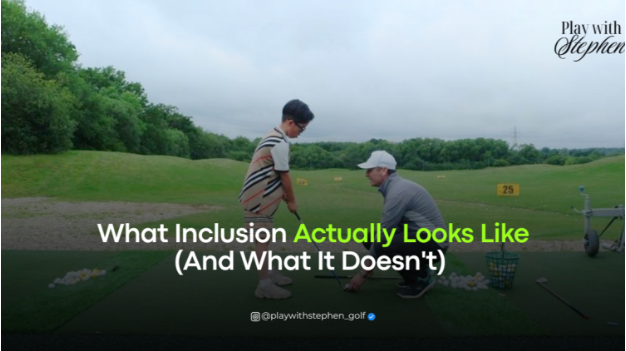
Play With Stephen exists because sport can create genuine opportunities for connection and belonging.
Golf can bring people together in an environment that allows focus, patience and participation. However, the presence of a person with autism on the course does not automatically make the experience inclusive.
Real inclusion happens when the person feels welcome, supported and free to participate at a comfortable pace. It also means listening to the autism community and involving them in the conversations and decisions that affect them.
That is the standard Play With Stephen continues to pursue.
We do not want inclusion to exist only in campaign messages or photographs. We want people to experience it on the course, at our events and in the communities our work supports.
Visit www.pwsgolftournament.com to learn more about Play With Stephen and support our work.


